Emma Turnbull Lawyers Blog
What Evidence Should I Preserve for an FVIO Case?
235+ Google Reviews
A practical guide to preserving evidence
Intervention order cases are often decided on evidence that already exists before anybody walks into a lawyer's office:
- Messages
- Messages
- Emails
- Photos
- CCTV
- Call histories
- Social media material
- Financial documents
- Witnesses
The problem is that people often start deleting, editing or selecting material before they get legal advice.
This can make proper assessment of the case much harder.
If you have just been served with a Family Violence Intervention Order proceeding, one of the most useful things you can do is preserve the evidence first. Decide what matters with your lawyer afterwards.
Keep the messages
Preserve complete conversations where possible. These may include:
-SMS
- WhatsApp
- Messenger
- Instagram messages
- Emails
- Other messaging platforms
Do not preserve only the screenshots that favour your position. Context matters.
A short extract from a long exchange may give a very different impression from the entire conversation.
A short extract from a long exchange may give a very different impression from the entire conversation.
Keep social-media material
Preserve relevant:
- posts
- messages
- comments
- photographs
- videos
- profile information
- other material
Do not alter or destroy any of the content and do not curate your evidence for your lawyer. Your lawyer needs to know what exists before advising you about its significance.
Preserve photographs and video
Relevant photographs or video may include:
- alleged injuries
- property damage
- the condition of a location
- recordings
- security footage
- other material relevant to a disputed incident
If CCTV exists, identify it early. Some CCTV systems overwrite footage after a relatively short period.
Keep call logs
Where contact is disputed, call histories may help establish:
- who contacted whom
- timing
- frequency
- patterns of communication
Again, the legal significance depends upon the particular allegations. Preserve the record rather than trying to interpret it yourself.
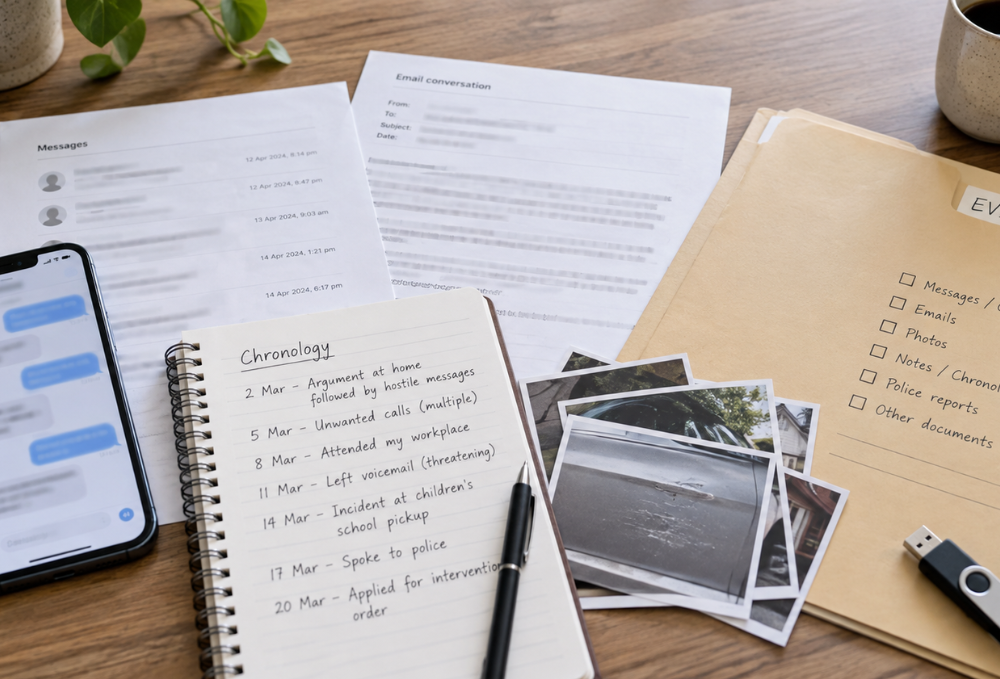
Write a chronology
Write down what happened while it is still fresh. Include:
- dates
- dates
- approximate times
- locations
- who was present
- what was said
- what happened before and after the incident
- police involvement
- other important events
A contemporaneous chronology can later be extremely useful.
Preserve financial information where relevant
Family-violence allegations may involve claims of economic or financial control.
Relevant financial material may therefore need to be preserved in an appropriate case as one potential evidence category.
Identify witnesses
Write down who may have seen or heard relevant events. That might include:
-family members
-family members
- neighbours
- colleagues
- friends
- police
- medical professionals
- others present at the time
Do not coach witnesses. Simply identify who may have relevant information.
Keep police and court documents
Make sure to retain:
- the FVIO application
- interim order
- Family Violence Safety Notice
- hearing notice
- police documents
- criminal charge material
- bail documents
- parenting orders
Bring any of these relevant documents to your lawyer as soon as possible. However do not delay contacting your lawyer if you do not have all relevant documents to hand.
Tell your lawyer about evidence that hurts your case
This deserves emphasis. Clients sometimes understandably want to show their lawyer only the strongest material. That is not helpful.
If there is a message you regret sending, show it. If there is a recording you think looks bad, disclose it. If the other side possesses damaging material, tell your lawyer.
A lawyer who knows about difficult evidence can advise you about it. A lawyer who discovers it unexpectedly in court cannot prepare for it properly.
Never fabricate, alter or destroy evidence
Under no circumstance should you:
- edit screenshots
- delete inconvenient messages
- create a false chronology
- ask somebody to change their account
- manufacture documents
We expressly warn against altering, fabricating or destroying evidence.
What happens if the case is contested?
If an FVIO matter proceeds to a contested hearing, evidence may need to be organised around the allegations actually in issue. That may involve witnesses, documents, cross-examination and submissions to the Magistrate.
Good preparation therefore starts well before the hearing.
At Emma Turnbull Lawyers, we review both the helpful and difficult evidence so that clients receive realistic advice about whether a proceeding should be contested, negotiated or resolved another way.
This article provides general information only and does not constitute legal advice. Intervention order and criminal proceedings depend upon the individual circumstances of each case.